Tuesday, January 29, 2013

Kingdom of the White Cloud - Aquarium Makeover

The aquarium in our living room has been running for nearly seven years, and despite enduring many changes over this time, the general theme has always been 'miscellaneous community' - a random mix of tropical fish species from different parts of the world, a selection of live and fake plants, rocks and wood. A good learning-curve for a beginner aquarist, and an interesting living room centrepiece, but in recent times I'd felt it just lacked a certain touch of character and intrigue...

The 'before' shot - a cluttered tropical community aquarium


The Inspiration

Close your eyes, and imagine the sound of a cool, clear stream trickling over a little rocky outcrop, with lush green forrest for a backdrop, and high mountainous peaks looming in the distance. I've always wanted to replicate a little section of one such clear, shallow creek system, with spring-fed origins forming amongst the snow-capped peaks of mountainous southern China. With one of my favourite fish species happening to inhabit that region, and my interest in the tropical community aquarium waining, I felt this was the perfect opportunity to give this biotope a shot. This is how I went about this little aquarium makeover, from cluttered mixed community, to shallow mountain stream:

The inspiration: Wu Tong Mountain, Guangdong province, Southern China (seriouslyfish.com)

1) The Strip-down: 

Just like with any makeover, the first step was to strip the aquarium down, piece by piece. With much regret, I sold most of the original inhabitants (2 x kribensis, 6 x emperor tetra) on Gumtree, and moved two remaining neon tetra to my South American tank (I decided that the four kuhli loaches and one bristlenose plec. would stay - this would only be a loose biotope, afterall). I then removed the hardscape, including rocks, wood and plants. I gave the tank a thorough clean at this point; the glass got a good scrub and the substrate a deep vacum. You could definitely tell that the poor old tank had not been tinkered with in many long years, judging by the amount of crap (literally) that came out during the clean!

The strip-down begins

2) The Hardscape

After the tank had been taken appart and given a deep clean, it was time to add the new hardscape (in aquarium terms, 'hardscape' relates to non-living decor, including rocks, wood etc.). The first step was to replicate a stoney creek bed. Using the existing gravel, I created a gentle slope slanting from right-to-left, and then arranged a select choice of river stones so that the largest were on the top of the slope, gradually declining in size toward the bottom, creating a natural flow and giving the impression of the bank of a shallow creek. I also entwind two small pieces of twisted wood around the river stones as to imitate some flooded roots.

Introducing the new hardscape, including river stones and wood

3) Finishing Touches

As the dust (or in this case, fish poo) settled, I was able to add the finishing touches to this riverine recreation. I scattered smooth pebbles along the bottom of the tank to round off the stoney creekbed look, and last of all planted a few specimens of vallis (Vallisneria sp.) behind the larger stones, representing a scattering of submerged vegetation growing on the banks of the 'creek'. And there you have it! It only took a few hours (and under $20) to turn the community aquarium into this simple, yet effective mountain creek biotope.

The end result - simple, but effective!

4) The Inhabitants

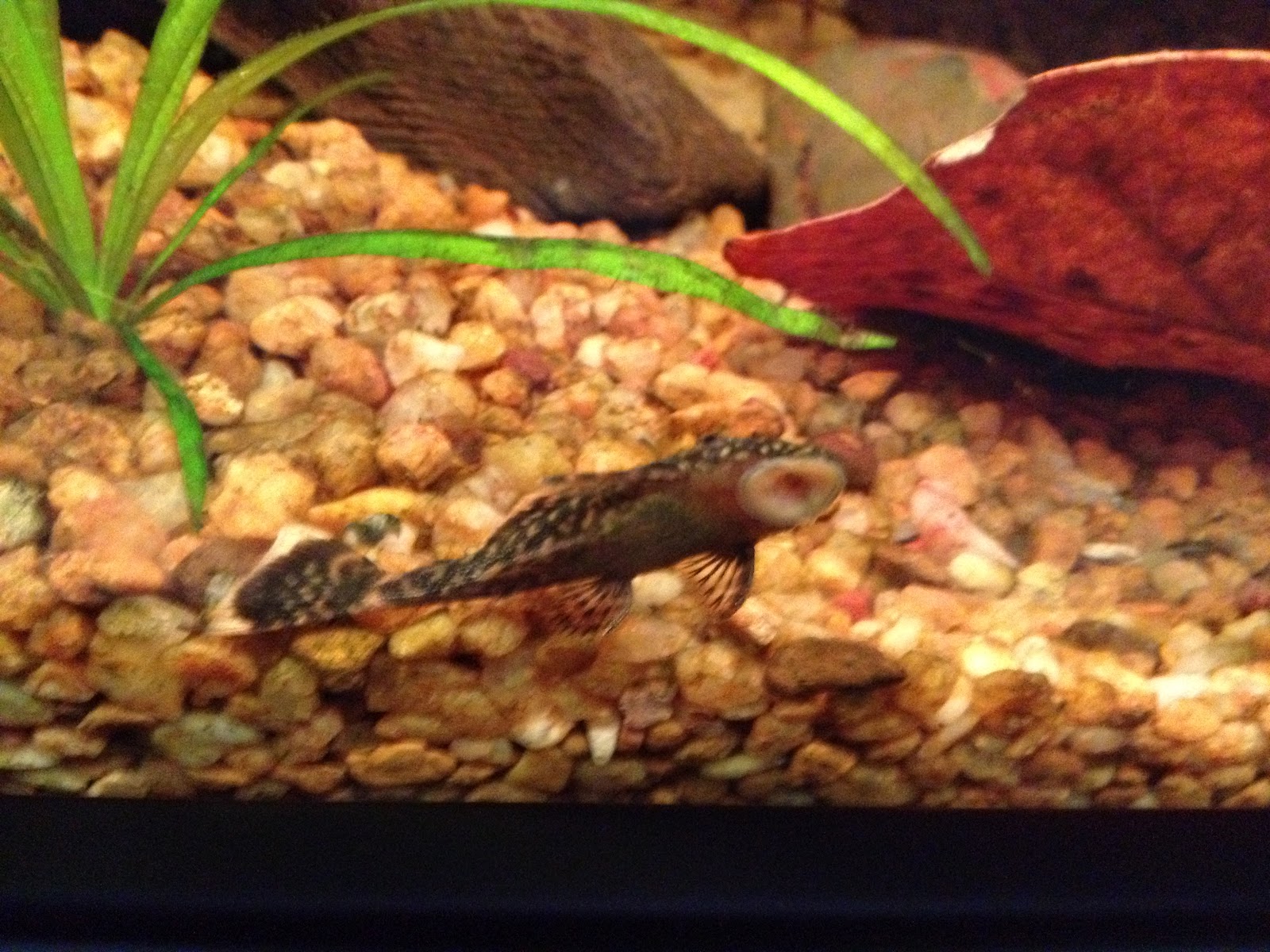
Running with the theme of a trickling southern Chinese creek, I could not go past one of my favourite fish species - the humble White Cloud Mountain Minnow (WCMM), Tanichthys albonubes. The WCMM originates from the clear flowing streams of southern China, and with its pretty red and neon-silver colouration, this species makes the perfect inhabitant for this tank. Along with the minnows and the original Kuhli loaches (Pangio kuhlii), and bristlenose plec (Ancistrus sp.), I added a shoal of glass shrimp to add some interest to the lower levels.

The humble White Cloud Mountain Minnow,  one of my all-time favourites

Glass shrimp love hanging out on the Vallis leaves!
Close-up of the hardscape

I'm really happy with the end result, and I find this simple, clean aquarium far more pleasing to the eye than the cluttered community setup. Eventually (a.k.a when I next get paid), I plan to double the number of WCMMs, and install a powerhead pump in order to increase the water flow in the tank to make it even more creek-like. Which do you prefer more, the community or the river? I'd love to hear your thoughts!


The Specs.

Tank:
75 cm x 35 cm x 35 cm
Approx. 90 L (25 US gallons)

Equipment:
1 Aqua One Hang-on-the-back (HOB) filter
1 Resun HOB filter
1 30W Aqua One heater
1 30 watt fluorescent light

Flora:
Vallisneria (Vallisneria sp.)

Fauna:
8 x White Cloud Mountain Minnow (Tanichthys albonubes)
4 x Kuhli Loach (Pangio kuhlii)
1 x Bristlenose Plec. (Ancistrus sp.)
15+ Glass Shrimp

Friday, January 18, 2013

The Little Things

"Mithrandir... why the halfling?"
"Saruman believes it is only great power that can hold evil in check, but that is not what I have found. I find that it is the small everyday deeds of ordinary folk that keep the darkness at bay. Small acts of kindness, and love. Why Bilbo Baggins? I don't know. Perhaps it is because I am afraid, and he gives me courage"

Today I was asked whether I'd ever want to just move away to a far away country, seeking a new adventurous life in some unknown place. In fact, I've been asked this very same question many times before - am I happy with the current life that I am living? The answer has always been yes, but I have never quite known why. But now I think I have an answer.

I have never wanted to do anything extraordinary. Big, life changing events, and the prospect of an exciting new path has never appealed to me. Like any man I have my hopes and dreams, of course I do. But in the end, I find that is the little things in life that make me happy. Lying around, just talking for hours with those who I love. Breaking out into tear-inducing laughter at a well timed jest with my wonderful workmates. Having a beer or two (and good food) while catching up with old friends. Staying up into the early hours of the morning watching a thrilling cricket match unfold, despite needing to get up early for work the next (or often on the same) morning. Breathing in the crisp air of a cold winters morning under a bright blue sky, listening to the birds sing, and the smell of coffee roasting in the kitchen.

These are the things that really make me happy - not some far off hope or dream that someday my life will be different, but the all of the little things that are happening to me, right now. I know things may be different in the future; but at the moment it is the everyday deeds and ordinary happenings of life that are keeping my doubts and fears at bay.

Thursday, November 29, 2012

Heroes and Villains

In the opening title sequence of Star Wars Episode 3: Revenge of the Sith, as the words of the yellow prologue disappear into the galaxy, there reads a very strange line referring to the ongoing Clone Wars: There are heroes on both sides. I have never quite been able wrap my head around that idea. There are heroes on both sides. How can you possibly have a hero on the side of the bad guys? A hero on side that you're not barracking for; the side that you want to be against? Well, after watching the stalwart efforts of Faf du Plessis and Peter Siddle on the final day of the 2nd test between Australia and South Africa in Adelaide, I think I can safely say I'm one step closer to understanding that very curious notion.

Though I must admit, I still don't quite consider the likes of General Grievous, Count Dooku, Chancellor Palpatine or Anakin Skywalker my heroes, I can definitely see how there were heroes on both sides in Adelaide. The result was only a draw, but Australia threw absolutely everything they had at the Proteas, and the Saffies clung on as if their lives depended on it. Faf du Plessis was one such hero, batting for more than seven and a half hours for his beloved country. Peter Siddle was another, giving his side a sniff when they had all but been snuffed out; bowling more overs (63.5) than any Australian in a test match since the great Glenn McGrath sent down 77 in Barbados in 1999. Then there was Jacques Kallis, batting on one leg for two vital innings, and David Warner, counter-attacking his way to a hundred on the first day when wickets were tumbling around him. And it's so easy to forget the efforts of the two opposing captains; the fast and flashy Michael Clarke with a flawless flowing double in the first innings, and the dogged, workman like Graeme Smith with a gritty fighting ton in response. Yes, there were heroes everywhere; there was no side that didn't deserve not to win, and so no side did. One of the most beautiful and truly wonderful things about test cricket.

Despite the series still hanging in the balance at nil-all going into the final test, Australia has definitely had the best of it so far. They have outplayed the South Africans for a majority of the series, though not forgetting a few little wobbles here-and-there. So why is it that I hold such grave fears for the WACA?

First of all, I fear the fitness of the Australian side - the quick bowlers, to be precise - and the risks that will have to be taken to fill the void. James Pattinson is down and out again, and Peter Siddle, despite what he says, must be feeling the pinch after his epic efforts in Adelaide. Ben Hilfenhaus also shouldered a massive workload in the City of Churches, and is definitely not bowling anywhere near to his full potential. So how are we going to take 20 wickets in Perth, without leaking an unassailable number of runs in the meantime? There is no Ryan Harris, in my opinion Australia's best bowler, to turn to. Mitchell Starc is still very much a rookie, and surely still in white-ball mode after reaching such great heights in the T20 world cup and Champions League. Josh Hazelwood and John Hastings, both brought into the squad to cover for the fatigued Siddle and Hilfenhaus, are not yet ready for the step-up into test cricket.

And Mitchel Jonshon. Mitchell Johnson. Hero, or villain? The name that strikes so much hope, and yet so much fear in my heart. The name that opposition batsman love to face, and yet hate to face at the same time. The most overrated, and yet the most underrated bowler of modern times. He's like your first love as a smitten teenager; he treats you so badly but you just want - no - you need to run back to him. Mitch is no doubt the ultimate X-factor. The highest-stakes, risk-reward player in the game. He has the ability to win you, or loose you the game in one spell of bowling. So what do we do with him? I have no answer. If he plays, Australia will either concede 500+ runs and loose the game by a big margin, or win inside two and a half days. Is that a risk the selectors are willing to take? I just don't know.

There is one last thing that I want to mention here. The ghost in the machine. That voice, ever in the back of the minds of all cricket-loving Australians. It whispers Punter. It calls for Ricky's head. Some want the great hero of Australian cricket for so many years, gone. Others want him to have yet another one-last-chance. We all know it has to happen one day. But the day Ricky Ponting leaves test cricket will not be an easy one to fathom. I have no doubt that Ricky wants to stay on to the Ashes next Year, and fight for that little urn one last time. That's just the way he is. The ultimate competitor. But has he gone too far? Has he and the selectors put the best interests of the team behind them, to focus on his personal glory? Or does he truly believe he is still the best man for the job? One has to believe the latter. Either way, surely his time is nigh. In my humble opinion (and don't get me wrong, I love Punter as much as any Australian cricket fan), I really think the Perth test should be his last. For the betterment of the team; for the future. Sri Lanka are touring in the New Year for three tests. With all due respect to the Sri Lankan bowling attack, they are not Dale Steyn, Vernon Phillander and Morne Morkel. I just think that there will be no better time than the Boxing Day test against Sri Lanka to introduce Ricky's long-term replacement to test cricket. Whether that's Usman Khwaja or Phillip Hughes is a question for another day. But I really believe that if neither of them are batting at four come Boxing Day, the side will suffer for it in the near future.

So there you have it. Who will be in the side come the WACA test on Friday? How will it all pan out? Who will be the heroes and villains in the test which will decide what has been one of the most gripping test series played in Australia for many a year? Let me know your thoughts!


Tuesday, October 9, 2012

Almost Getting It Right - A Review of Australia's 2012 T20 World Cup

There is no doubt that Australia have come a long way in T20 cricket since the disastrous days of the first Twenty20 world cups, where my disappointment was plain to see here, and here. In the two most recent World T20 championships, however, Australia has got it right - almost. On both occasions, they've gone deep into the tournament - making the final in 2010, and the semi-final in 2012. In latter, they certainly played the best T20 cricket I have ever seen them play. Unfortunately, it wasn't quite to be, and the World T20 trophy still remains the only one missing from Cricket Australia's impressive cabinet. So let's dissect what Australia did right, and not-so-right, in Sri Lanka this year:
           
1) Team Selection - Chris' rating: 9/10

Australian Team, Sri Lanka 2012: Warner, Watson, M. Hussey, C. White, Bailey (c), Wade (wk), Maxwell, Christian/Doherty, Hogg, Starc, Cummins

The Australian selectors have finally learned how to build a proper T20 team. In the days of old, they were too traditional with their selections and game-plan, recycling and reusing players and techniques that worked in the longer formats, but didn't click in the shortest. Here's what I believe is essential in the make up of a successful T20 team:

1) Have your most explosive, technical six-hitting batsmen up-front

The opening batsmen are the only players in T20 who have enough time to get their eye in, and it essential that they do, as 99% of the time these are the players that will smack you a match-winning total. They are wasted if played down the order, as even the best of six hitters, such Chris Gayle and David Warner, need time to play themselves in - well, most of the time, anyway. Australia got this right this tournament, opening with Warner and Watson.

Batting of this quality would never be wasted down the order

2) Have a wide variety of bowling options

In the past, Australia would play the standard, tried-and-true bowling attack of three seamers, one spinner, and maybe one medium-pace allrounder. It just doesn't work. In 20/20, variety is your best weapon. You need bowlers who can adapt to the game situation as quickly as possible, and if they can't, then you need to be able to turn to someone who can. You also need variety within the pace and spin attacks; someone who can swing it if it's swinging, hit the pitch hard if it's not; someone who can toss-it-up if it's turning, and someone who can dart it in at the base of off-stump if it isn't. And someone you can turn to if you just need a darn wicket.

Australia had all of that this tournament; Mitchell Starc is a very good young swing bowler, and Patrick Cummins a real wicket-taker. Brad Hogg turns the ball and Doherty darts it. Shane Watson is as destructive as any, and Glenn Maxwell and Dan Christian are both solid options. The only thing they really lacked was a quality death bowler, but in time Starc will be just that, I am sure.

3) Play two specialist spinners, at least

I can't explain why, but spinners are still the most dangerous bowlers in T20 cricket. There's just no question about it. Maybe it's the lack of pace on the ball, maybe it's the accuracy, maybe it's the bamboozlement - I just don't know. What I do know is that they are effective. Just look at the list - Mendis, Narine, Ajmal, Swann- it just spells mystery, accuracy, and wickets. And although Hogg and Doherty aren't quite in the same echelon of quality spinner, they were still effective, and the idea behind their tandem selection was definitely right.

Spin is a big thing in T20 cricket - and this man is the biggest
4) Have a brave captain

The problem with Ricky Ponting as captain was that he was too orthodox, too set in his ways, too old-fashioned. Bowl the wicket taking pacemen in the powerplays, bowl the spinners with the field set out, bring the pacemen back in for the death overs. And it got punished, time after time. I'm still not overly convinced of George Bailey's position in the team, let alone as skipper. But I do believe that that man can lead a side. He has a good mindset - that of flexibility and new ideas. He leads the team very well in the field. If he can start doing it with the bat, I will definitely be the first to jump onto the Bailey-Bandwagon.

So Australia had in their team most of what it takes to win a tournament such as the T20 world cup. What lacked, however, was a solid and adaptable game plan.

2) Game Plan - Chris' Rating: 5.5/10

In the early parts of the tournament, Australia's game plan was excellent. This was because the conditions were very well suited to the way the Australians love to play: very aggressively. The pitch at Colombo was quick and bouncy, and the Aussies played accordingly; barraging the opponent with short deliveries, and hitting big sixes square of the wicket, with Shane Watson chief plunderer with both bat and ball. All of their successful matches were won in this manner.

"Congratulations on adapting your game plan - the Aussies didn't!"
However, as the pitch and conditions began to change - to a slow, dusty wicket conducive to spin - the Australians, in particular, their batsmen, failed to adapt their game plans. If you watched the way Pakistan batted in the final super-8's game vs. Australia, you would have seen how to properly play on that wicket: bat with respect to the conditions early on - play yourself in, build a solid platform, keep wickets in hand, and then launch with 10 overs to go. With a total of 160 - odd to chase, the Australians tried to attack too early, lost wickets, and never had a sniff. A similar thing happened to Australia in the semi-final against the West Indies, although with a much higher total to chase. It proved to be just too much, especially against such quality bowling from Narine and Ravi Rampaul.

It just goes to show that even in such a short period of time, conditions can change quickly, and quick adjustment and adaption is key in T20 cricket. With a little more practice and experience, I think Australia will definitely improve this facet of their game; they've come along way, and things are looking up.

3) Batting - Chris' Rating: 4/10

Australia relied far too heavily on Watson 
Australia's batting was OK in this tournament - nothing more, nothing less. They relied far too heavily on Warner and Watson at the top, and had not much to write home about after that. Mike Hussey is still a workhorse and very much the glue that holds the middle order together; there will be a big void to fill when he retires. George Bailey showed glimpses when he got the opportunity, but couldn't quite do it when it really mattered, though he was unlucky in the semi-final. I believe he would have gotten very close to chasing down the West Indies' huge total if someone had been able to stay with him to the end. Cameron White and Matthew Wade just seemed to lack a little bit of experience and composure in times when it really mattered, and the middle order still lacks that really solid pinch hitter to finish off an innings - a role that I think Mitchell Marsh will play very well in the future.

4) Bowling - Chris Rating: 7/10

Mitchell Starc never fails to impress
There were a lot of positives to come out of Australia's bowling performance at the world cup. In particular the young-guns, Mitchell Starc and Patrick Cummins, were fiery, fast, and always threatening. But the most important fact is that they both came out of the tournament injury-free. I was almost praying that they would come out of every match unscathed following Australia's recent horror run with injuries to young fast bowlers, so this tournament was a major step in the right direction. Mitchell Starc was particularly good - he swung the ball aggressively and accurately, and there is no doubt in my mind that he is Australia's next big thing. Little needs to be said about Patrick Cummins, at 19 years of age bowling inswinging yorkers at the 150kph mark... what an exciting prospect he is!

Unfortunately, Brad Hogg, at the ripe old age of 41, did not have quite the impact he would have liked coming out of retirement. The conditions suited him, but he just seemed to lack the energy of old, and he gave away that one loose boundary ball each over - something he never did back in his hay-day. Xavier Doherty continues to impress with his darting left-arm orthodox, and in my books he is certainly Australia's premier limited overs bowler, alongside Stephen O'Keefe.

His roll as a medium pace allrounder is supposed to be a supporting one, but Shane Watson is as big a wicket-taking weapon as any, in all forms of the game. His danger comes from his surprisingly heavy ball and quick bouncer, particularly following his slow, lumbering run-up. He is certainly developing into one of Australia's all-time greats, if he isn't up there already.

Dan Christian is superb in the field
The other allrounders, Glenn Maxwell and Dan Christian, were both sturdy without being highly effective. They didn't quite prove to me that they belong at international level just yet, especially with players such as David Hussey, Mitchell Marsh and Steven O'Keefe waiting in the wings. However, one thing that impressed me about Dan Christian is his fielding, and in particular, his catching - some of the grabs he took were absolutely superb.

All in all, I think this tournament can be labeled a success for Australia, despite falling just short of winning. They were very good in some facets of the game, not so good in others, but there is no doubt that they are improving as a T20 side. The foundations have certainly been laid for an agressive, young and consistent Australian T20side, upon which I hope another cricketing dynasty is born. Until then, however, us cricketing nuts turn our attention to the longer formats of the game, with South Africa knocking at our door. Bring on the summer!

Tuesday, October 2, 2012

A Hobby of Mine

Fishkeeping is as much a science as it is an art, and I find an intricate aquarium more captivating than any book or form of hi-tech entertainment. I certainly find running and maintaining a healthy aquarium just as rewarding as watching the behaviour and interactions of the fish species within.

These are my three current tanks:

1. "Guyana Blackwater"


Volume: 200L/52 US Gallon

Flora: Amazon Sword (Echinodorus amazonicus/Echinodorus sp.), Crypt (Cryptocoryne sp.), Pygmy Chain Sword (Echinodorus tenellus), Vallis (Vallisneria sp.), Ambulia (Limnophila sessiliflora), Water Sprite (Ceratopteris sp.), Java Moss (Vesicularia dubyana/Taxiphyllum barbieri), Java Fern (Microsorum pteropus)

Fauna: Freshwater Angelfish (Pterophyllum scalare), Pristella/X-ray Tetra (Pristella maxillaris), Bristlenose Plecostomus (Ancistrus temminckii)

My Guyana Blackwater biotope is my largest and most recent setup, and my pride and joy! As its name suggests, this tank represents a small blackwater creek or pool of Guyana, northern South America. To recreate the conditions of this ecosystem, I have subdued the lighting and water-flow in the aquarium, and I use Indian almond leaves to replicate the tea-stained colour and slightly acidic conditions of a blackwater pool. Of course, all of the fish species (and most of the plants) are native to South America too.

I decided to keep the stocking of this tank simple, as I find a simplicity and neatness make for a much more aesthetically pleasing aquarium than one that is heavily stocked and busy. The current stock are four juvenile angelfish, which are the heros of the tank and from which I hope to acquire a breeding pair (or two!). With them are a shoal of pristella tetras and a single bristlenose catfish. With a 100% survival rate in three months so far, I'm glad that to have been able to put all my years of fishkeeping practice to good use and give the project a very successful start.

Ancistrus temminckii

Pterophyllum scalare


Pristella maxillaris

The view from my bed

2. "Community"


Volume: 110L/29 US Gallon

Flora: Vallis (Vallisneria sp.), Ambulia (Limnophila sessiliflora), Java Moss (Vesicularia dubyana/Taxiphyllum barbieri), Java Fern (Microsorum pteropus)

Fauna: Kribensis (Pelvicachromis pulcher), Emperor Tetra (Nematobrycon palmeri), Harlequin Rasbora (Trigonostigma heteromorpha), Neon Tetra (Paracheirodon innesi), Kuhli Loach (Pangio kuhlii), Bristlenose Plecostomus (Ancistrus temminckii)

I have had this community setup for six years, whereby it has gone through many changes in terms of look and stocking. I picked it up on a roadside verge in 2006, and hastily went about starting my fishkeeping hobby - and so with this tank lie the many a past mistakes of a rookie fishkeeper. From terrible stocking choices to the disastrous attempts at growing live plants, unsuccessful breeding efforts and countless suicidal fish; this tank has seen it all! However, after many years of trial and error I have fine-tuned my fishkeeping enough to develop a healthy and fun community aquarium.

This 29 gallon is currently home to a breeding pair of kribensis cichilids; two parents still with a lot to learn (they have eaten their first few spawns!). There is also a shoal of emperor tetras, along with a couple of neon tetras and harlequin rasboras, long-term survivors from previous communities gone. Rounding off the stock is one bristlenose pleco who keeps the algae levels down very effectively, and four kuhli loaches, who have been with me for around four years. One day I hope to raise a batch or two of kribensis fry, and hopefully make a cheeky profit while I'm at it!

 Pelvicachromis pulcher (Male)

 Pelvicachromis pulcher (Female)

Pangio kuhlii

3. "Honours Desktop"


Volume: 15.5L/4 US Gallon

Flora: Java Moss (Vesicularia dubyana/Taxiphyllum barbieri), Java Fern (Microsorum pteropus)

Fauna: Siamese Fighting Fish (Betta splendens),  Western Blue-spot/Swan River Goby (Pseudogobius olorum)

I got this tank in the middle of last year while I was in the midst of my honours degree; I had this little setup on my desk to add a bit of interest to what was my otherwise bleak office. Severus, the Siamese fighting fish, was my wily companion during those long days and nights spent writing my thesis, and he's still going strong today! Also in the tank is an Australian native Blue-spot goby, which was collected by my friend Syngeon during sampling up on the Gnangara Mound. This tank has also been home to a few other native fish and invertebrate species, including gobys and glass shrimp, which have all come and gone since. In the future I plan to turn this tank into a native Western Australian-wetland setup featuring gobys and a plethora of invertebrates. 

 Pseudogobius olorum - A true survivor

Betta splendens - "Severus"

Thanks for reading! 


Thursday, May 31, 2012

Yellow

When I stepped outside this morning, I knew something was different. Besides a single pillar of rainbow shooting up into the heavens, the world was bathed in a shade of yellow, like a series of sepia images moving before my eyes. The air was uncannily warm and the wind was heavy with the smell significance; of change.

Had I woken up into a new life? Was I the same as I was the day before? As Alice once pondered: Had I changed in the night? No. That was too simple. It was not I who changed; it was the world around me that had.

And still all was yellow. The colour of sunshine, of joy, but also of decay, and cowardice. I did not know whether I felt a sense of foreboding, or happiness. It was definitely the latter.

I never understood what the Coldplay song was about until now.

Congratulations to my beautiful mother on her engagement. She deserves everything. 


Wednesday, May 16, 2012

The Odd Couple

If you saw them from afar, you would consider them an odd couple. Two boys sit on the inky blue slide at Drumsite Park, Christmas Island - one is tall, dark and lanky; the other is rather short, stubby and red in the face. As they watch the sparse procession of cars roll along Murray Road, little do the boys know that, despite the slightly juxtaposed appearance, their lives will follow strangely similar parallels. As they will find out however, behind every great friendship is an even greater story. 

This tale starts, as you may have gathered, with these two boys, one of whom happens to be myself (the short, stubby, red-faced one), and the other is one of my best friends. Looking back, I can't help but feel that Jensen Tan (or 'Jens' as he as affectionately known) and I were always destined to become good friends. For one, we were both stuck on the same dog-shaped rock in the middle of the Indian Ocean for a vast majority of our childhood years. Add on top of that the fact that we lived two houses down from each other on the same street on said tiny dog-shaped rock, and it's impossible to see how we could not have become friends. Some call it destiny - I just call it good luck! 


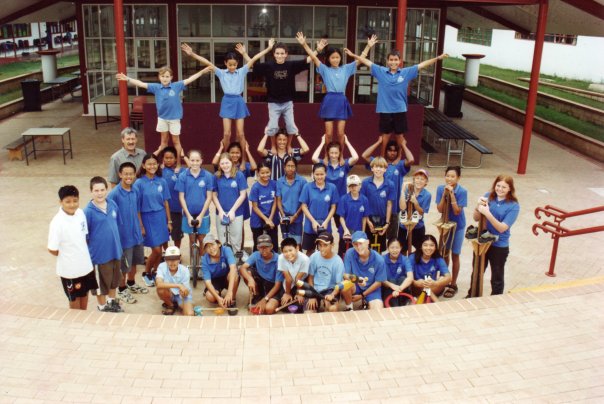
Circus days: Unfortunately I am not doing the 'Two High" with Jensen in this photo - I'm top right and he's third from the left in the front row.  

We spent our youths tearing up the streets of Drumsite on our push-bikes (and Uncle Burt's quad-bike, which almost cost us our lives on countless occasions), dodging crabs, going on treks to all the best beaches, playing soccer and cricket, and schooling together at CIDHS. Our bonds were tightened closer still as the annual circus came to town, and we were always Two-High partners (and even attempting the dreaded Three-High on occasion) - now if that isn't going to create virtually unbreakable trust between two people, I don't know what is.


Shenanigans: Jensen, Aidan and myself. 

However, the Island life is a harsh mistress for young futures, and the day came where all who had become so close had to be separated, and thrown into the crewel reality life in the big smoke... of Perth. The strange thing is, despite living highly separate lives since the Island days, the stories Jensen and Chris tended to follow freakishly similar parallels. There are tales of love and loss, or adventure and travel, of nightlife shenanigans and friendships, eternal and unlikely. We both went through highschool and uni, still listen to the same music, partake in the same activities, and enjoy the odd queerly flavoured vodka every now and then. We both fell in love with our respective partners within 6 moths of each other, and we both entered the brave new world of full-time work on exactly the same day in 2012 (without planning to do so in the slightest). 


Still friends: New Years Morning at Kings Park, 2011 - What a year it would turn out to be  for the both of us!

Jens and I have both come a long way since the days of the tall lanky and squat chubby boys sitting on the blue slide down at Drumsite Park, and although the time we spend together now is fleeting, it never feels like we've missed a beat. They say time is the destroyer of all things, but if given the opportunity to reamend this statement I would change it to say this: "Time is the destroyer of all things trivial". And friendship - true friendship - is not one of them.

Because I know I will have this one to my dying day.